

Flood Cleanup Eye Protection: Lessons from the 2025 Texas Hill Country Floods
A source-led case study of rapid flood conditions—and the changing eye hazards workers face when rescue gives way to assessment, debris removal and cleanup.
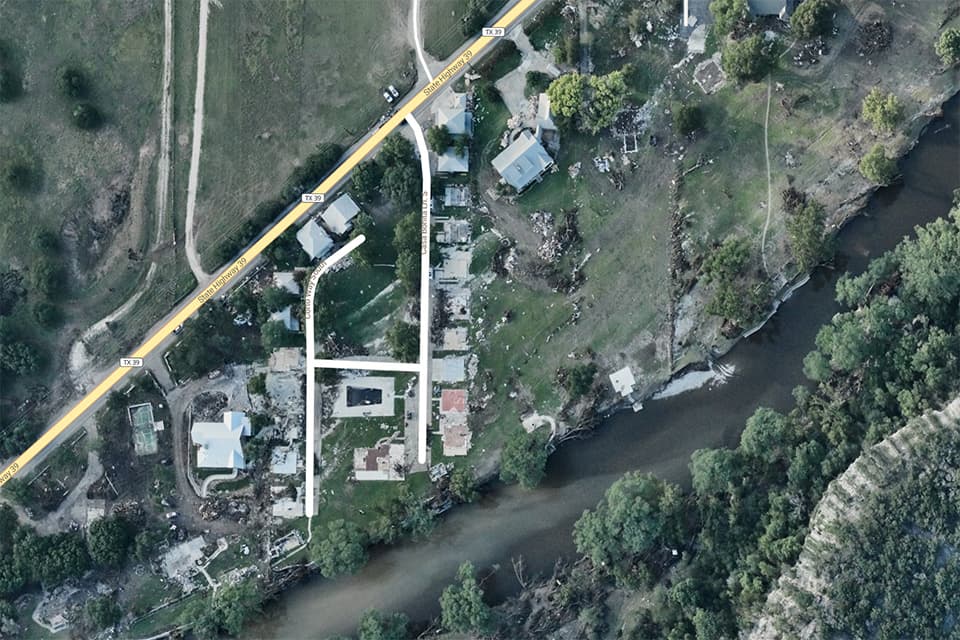
The flood was a hydrological emergency, not an eyewear case study. Its documented speed is the reason to examine the next phase carefully: each transition in the work—from reconnaissance to debris handling to washing—can change the route by which material reaches a worker's eyes.
Key facts at a glance
The 2,200+ personnel and 1,200+ asset figures describe the statewide Texas response reported July 9, not a Kerr County cleanup workforce count. The same report names more than 20 state agencies. State response source.
A fast event, a changing worksite
NOAA dates the onset of extreme precipitation to July 3. NASA's Hunt measurements describe the July 4 flash-flood period. The subsequent cleanup phase is an operational interpretation based on documented response tasks and OSHA's flood-recovery hazard guidance—not a claim that a single crew followed this exact sequence.
Rainfall intensifies
NOAA traces the extreme precipitation to moisture and a convective system beginning July 3. Local intensity varied; this was not a uniform rain field.
Flash flooding
At Hunt, NASA reports rapid rainfall and a 26-foot Guadalupe River rise in 45 minutes. Kerrville is a separate downstream gauge location.
Rescue to assessment
Responders, aircraft imagery and infrastructure teams moved from immediate rescue toward damage mapping and access assessment.
Exposure profile changes
Debris handling, silt, washing and damaged interiors introduce eye hazards different from those in the floodwater itself.
Texas's response account mentions road repair, debris removal and saw crews. NOAA's National Geodetic Survey collected aerial imagery for damage assessment. Those activities illustrate why the exposure inventory cannot remain frozen at the rescue stage. Office of the Texas Governor; NOAA National Ocean Service / National Geodetic Survey.
What the rainfall and river data actually show
NOAA's analysis estimates 10–12 inches in six hours at some locations and says localized multi-day totals likely exceeded 20 inches. These are different windows and spatial estimates, not two measurements from Hunt. NOAA stresses that gauge, radar and satellite products differ and that Hill Country terrain complicates estimates. NOAA analysis, including Figure 7.
At Kerrville, separate provisional USGS gauge data quoted by NOAA show the Guadalupe River stage rising approximately 32.5 feet in 90 minutes (1.82 ft at 5:15 a.m. to 34.29 ft at 6:45 a.m. CDT, July 4). This is not NASA's 26-foot / 45-minute Hunt figure. NOAA also reports 59 gauges above major-flood thresholds and three additional gauges above moderate thresholds; sites without defined thresholds are excluded. NOAA Physical Sciences Laboratory.
Where recovery work can reach the eyes
The following mechanisms are a task-based editorial synthesis, not a record of injuries in Kerr County. OSHA identifies biological, chemical, electrical, mold and debris hazards in flood response and recovery. The table translates representative cleanup activities into possible eye exposure routes that a site assessment should test. Occupational Safety and Health Administration.
Mud and silt removal
Shoveling, scraping and moving wet deposits
Possible eye routeGrit and dirty splash; dried deposits can become airborne
Debris clearing
Lifting, cutting or shifting damaged materials
Possible eye routeFlying chips, nails and unstable fragments
Pressure washing
High-energy water striking contaminated surfaces
Possible eye routeRebound spray, grit and cleaning-product splash
Damaged building cleanup
Opening interiors and removing wet material
Possible eye routeDust, mold particles and unexpected chemical exposure
An illustrative PPE decision matrix
“Preferred” here means an editorial starting point for further assessment, never an automatic requirement or a model approval. Match enclosure, splash coverage, particle exclusion, fit, chemical instructions and other controls to the actual work. A face shield, if chosen, is an adjunct to primary eye protection. CDC's mold cleanup guidance is more specific about dust-excluding goggles and respiratory protection. Occupational Safety and Health Administration; Centers for Disease Control and Prevention.
| Task | Safety glasses | Goggles | Face shield | Respiratory PPE |
|---|---|---|---|---|
| General debris inspection | Task-dependent | Task-dependent | Task-dependent | Assess if dust is present |
| Mud shoveling | Potentially insufficient enclosure | Preferred where splash/grit is present | Task-dependent adjunct | Assess as deposits dry |
| Pressure washing | Potentially insufficient enclosure | Preferred primary eye protection | Task-dependent adjunct | Assess mist/chemicals |
| Dry silt and dust | Potentially insufficient enclosure | Preferred if particles are excluded | Not a dust seal | Task-dependent; assess contaminants |
| Mold-damaged interiors | Potentially insufficient enclosure | Dust-excluding goggles per CDC | Not a particle seal | CDC: at least NIOSH-approved N95 for mold cleanup |
On narrow screens, swipe the table horizontally. “Potentially insufficient enclosure” is a prompt to examine the hazard and eyewear—not a categorical statement about every safety-glasses model.
What safety goggles do not solve
Goggles protect a specific exposure route. They do not make contaminated water safe, remove mold, de-energize electrical equipment, stabilize debris or make a chainsaw operation safe. Flood recovery may also require respiratory, hand, chemical, electrical, head, hearing and foot protection—and engineering or administrative controls—depending on the work. OSHA warns that some flood-response operations call for trained, properly equipped personnel. Occupational Safety and Health Administration.
For mold cleanup specifically, CDC advises complete eye protection and at least a NIOSH-approved N95 respirator. Glasses and goggles with open vents do not exclude small particles; selecting an enclosed eye protector does not substitute for the respirator or safe cleanup methods. Centers for Disease Control and Prevention.
Translate the task brief into a model review
EYP207 is an Ecofort Safety catalog safety goggle, presented here only as a candidate for product-specific review—not as an approved flood-cleanup or mold-cleanup solution. Confirm the lens, ventilation/enclosure, fit, markings, instructions and model-matched documentation for the intended exposure and market before purchase. Its listed polycarbonate lens is a material detail, not proof of splash or dust-exclusion performance.
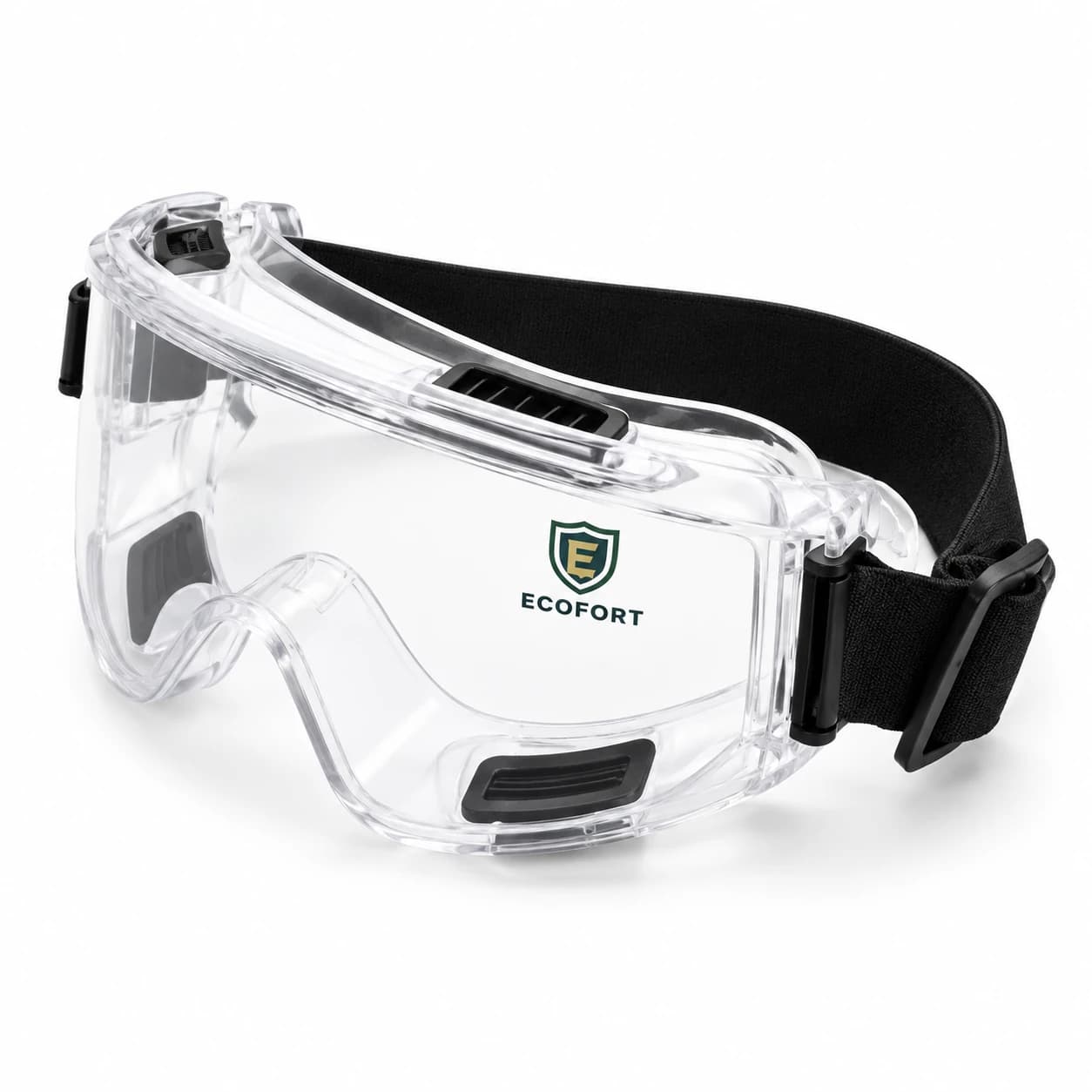
Safety Goggle
Catalog model · product-specific documentation and task suitability require verification.
Sources and method
Event measurements come from NASA and NOAA; the response totals come from the Texas Governor's July 9 statewide update; cleanup hazard and PPE considerations come from OSHA and CDC. Hunt and Kerrville are separate gauge locations. NOAA's Kerrville stage is provisional, and its precipitation synthesis notes dataset and terrain uncertainty. The task matrix is Ecofort's editorial inference, not an official reconstruction of worker exposure, an injury dataset, legal advice or a substitute for a competent site-specific assessment.
- NOAA Physical Sciences LaboratoryWeather Whiplash in Texas: Drought to FloodAugust 11, 2025; updated August 28, 2026
- NASA Scientific Visualization StudioTracking Weather Extremes: July 2025 Texas Precipitation and Guadalupe River FloodingDecember 29, 2025; updated January 7, 2026
- NOAA National Ocean Service / National Geodetic SurveyTexas Hill Country Flooding: Aerial ImageryJuly 11, 2025
- Office of the Texas GovernorGovernor Abbott Continues State Response, Recovery Efforts for Texans Impacted by FloodingJuly 9, 2025
- Occupational Safety and Health AdministrationFlood Response and RecoveryAccessed September 15, 2026
- Centers for Disease Control and PreventionMold Clean Up Guidelines and RecommendationsFebruary 16, 2024
Hero image is a locally stored copy of NOAA's credited aerial assessment photograph; no stock tragedy photography or third-party flood imagery is used. The rainfall comparison is an original HTML/CSS editorial schematic based on the cited values.
Frequently asked questions
Are safety glasses enough for flood debris inspection?
They can be a starting point for some low-splash visual inspection, but the work area and task matter more than the label on the eyewear. Loose debris, airborne dust, mud and contaminated splash create different exposures. An employer or competent supervisor should assess the actual task, inspect the eyewear for fit and condition, and change protection when the exposure changes. A face shield, where used, adds coverage but does not replace primary eye protection. This article's matrix is an illustrative planning aid, not a site-specific PPE instruction.
When might goggles be preferable to safety glasses during cleanup?
Goggles may offer more enclosure where flying grit, wet splash or fine particles can reach around ordinary glasses. The chosen model must fit the wearer and match the exposure; ventilation design, seal and instructions all matter. CDC's mold guidance specifically calls for goggles that exclude dust and small particles and warns that open-vent goggles do not protect against those particles. Do not assume that a generic goggle, including a catalog model shown here, is suitable for mold work without verifying its configuration and the site's risk assessment.
Does a face shield replace goggles for pressure washing?
No. A face shield can add face coverage against spray and rebound, but it is not a substitute for properly selected primary eye protection underneath. Pressure washing can propel grit, contaminated water and cleaning chemicals back toward the operator. The nozzle, pressure, surface, chemicals and nearby people change the risk. Follow equipment and chemical instructions, control the work zone, and choose eyewear and any additional face protection from a task assessment rather than treating the matrix here as a universal rule.
What changes when dry flood silt becomes airborne?
A wet-debris task may become a dust task as deposits dry, are swept or are disturbed by demolition. Fine particles can enter around loose-fitting glasses, and the respiratory exposure is separate from the eye exposure. CDC advises complete eye protection and at least a NIOSH-approved N95 respirator for mold cleanup, but a specific cleanup site can involve other contaminants requiring additional controls. Avoid dry sweeping where safer methods are available; assess ventilation, dust suppression and respiratory protection as well as the eyewear.
Can one goggle model cover every flood-recovery task?
Not safely by assumption. Flood recovery includes debris handling, mud removal, washing, damaged-building work and potentially electrical, chemical or biological hazards. A goggle's lens material alone does not establish splash enclosure, particle exclusion, chemical compatibility or standard compliance. Review the model's construction, markings, instructions and product-specific documents against the intended task and destination-market requirements. Ecofort's EYP207 is presented as a catalog comparison point; its suitability for a particular recovery operation remains subject to verification.
What do the Texas flood figures tell us about eye protection?
The rainfall and river-stage measurements describe how rapidly conditions changed; they do not measure eye injuries or prove that one PPE configuration would have prevented harm. NASA's Hunt figures and NOAA's provisional Kerrville gauge figures refer to separate places and time windows. The Texas response counts are statewide, not a count of workers in Kerr County. The useful safety lesson is operational: as a response moves from rescue to assessment and cleanup, tasks and exposures change, so eye and face protection should be reassessed alongside other controls.