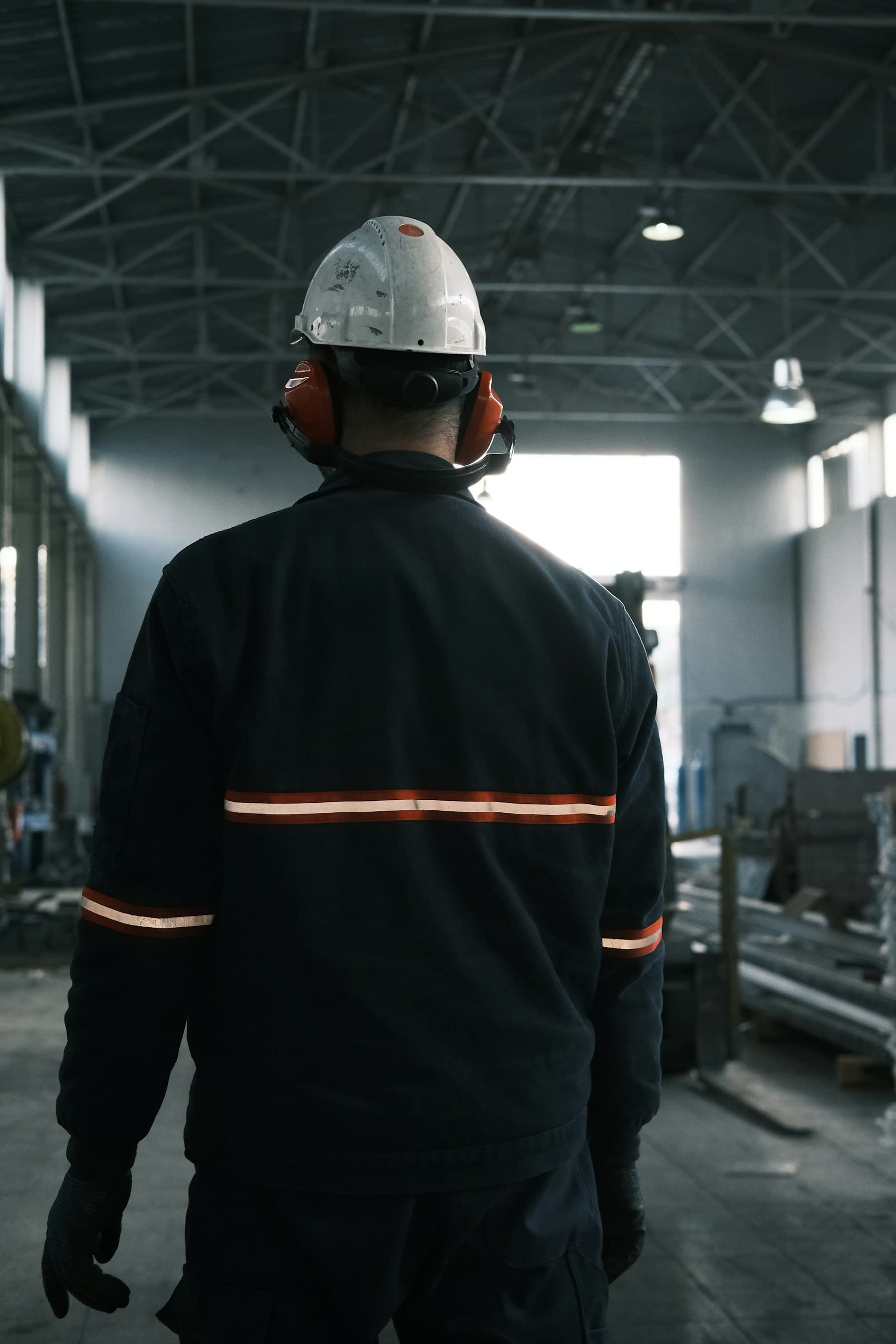

After the Mudslide: Protecting the People Who Enter Next
A practical guide to task-based PPE planning for mudslide search support, debris removal and early recovery—without treating equipment as a substitute for site control.
In this article +
When a mudslide stops moving, the emergency does not become an ordinary worksite. Search teams, public-works crews, contractors and recovery workers may enter terrain that is still changing, while water, damaged structures, buried services and vehicle movement create overlapping hazards.
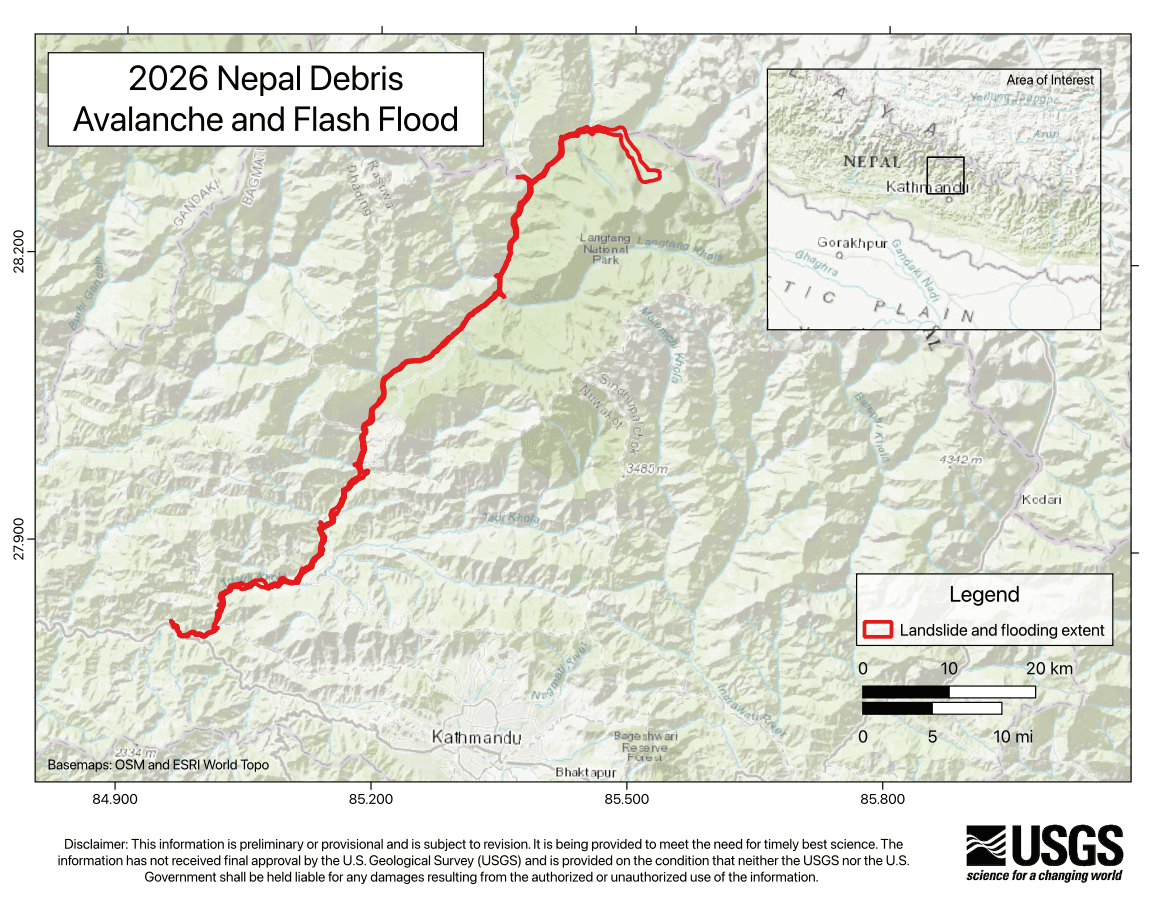
The August 2026 debris avalanche and downstream flooding in Nepal is a recent reminder of that transition. USGS reporting described a rapid slope failure involving a glacier and impacts extending far downstream. The event is context, not the subject of this guide: the practical question for safety and procurement teams is how protection needs change from restricted initial access through debris removal and early repair.
A changing risk environment
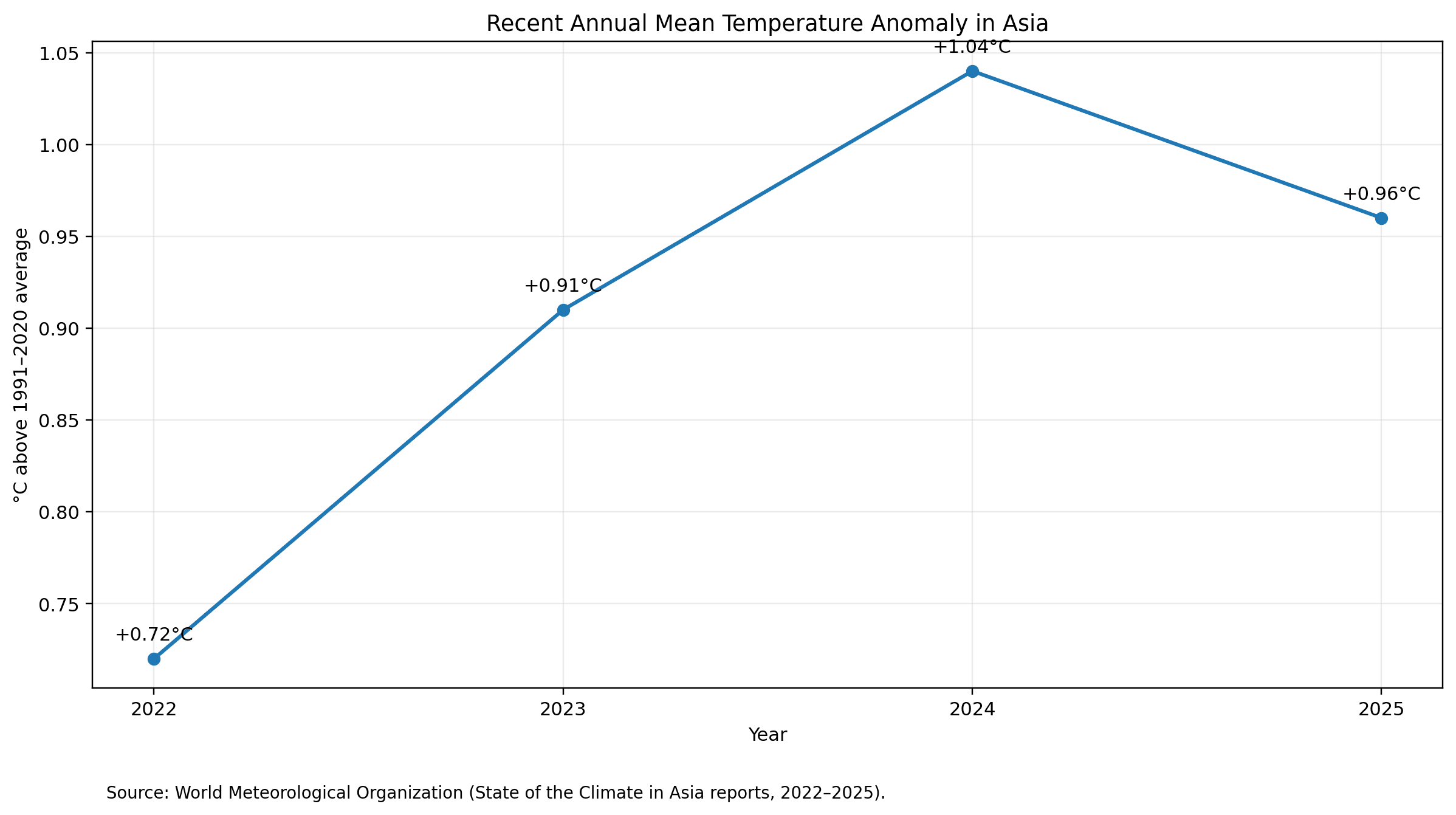
Recent annual WMO reporting shows Asia remaining markedly warmer than the 1991–2020 average: +0.72 °C in 2022, +0.91 °C in 2023, +1.04 °C in 2024 and +0.96 °C in 2025. Four annual points do not describe the cause of any individual landslide, and the chart above should not be read as an incident forecast. They do provide relevant climate context for organizations planning around heat, heavy precipitation, mountain hazards and disrupted infrastructure.
A response plan therefore needs more than a generic PPE list. It needs competent site leadership, current hazard information, controlled access and a way to change equipment requirements as work moves from reconnaissance to mechanical clearance, cleanup and reconstruction.
The hazard changes as recovery progresses
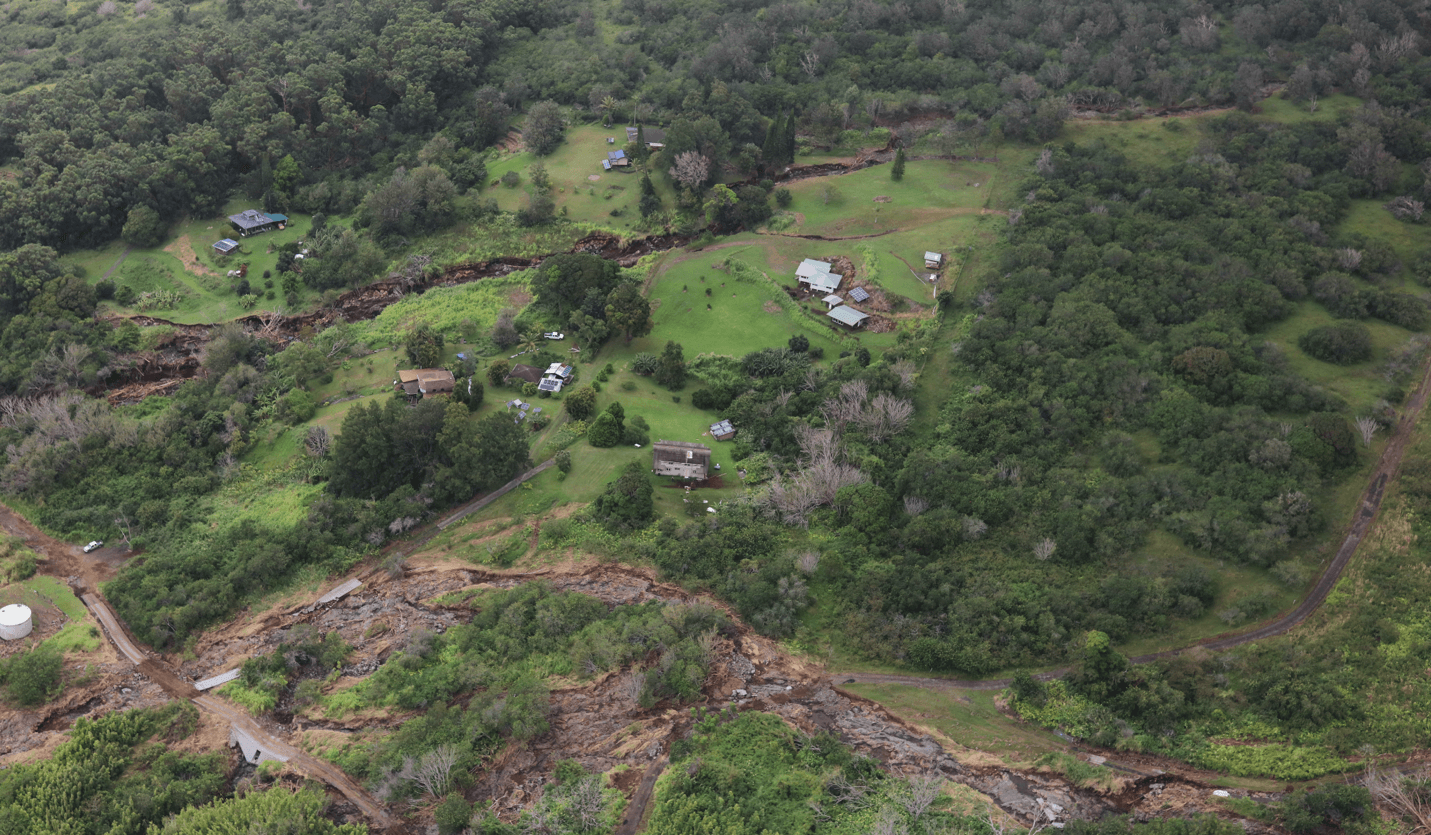
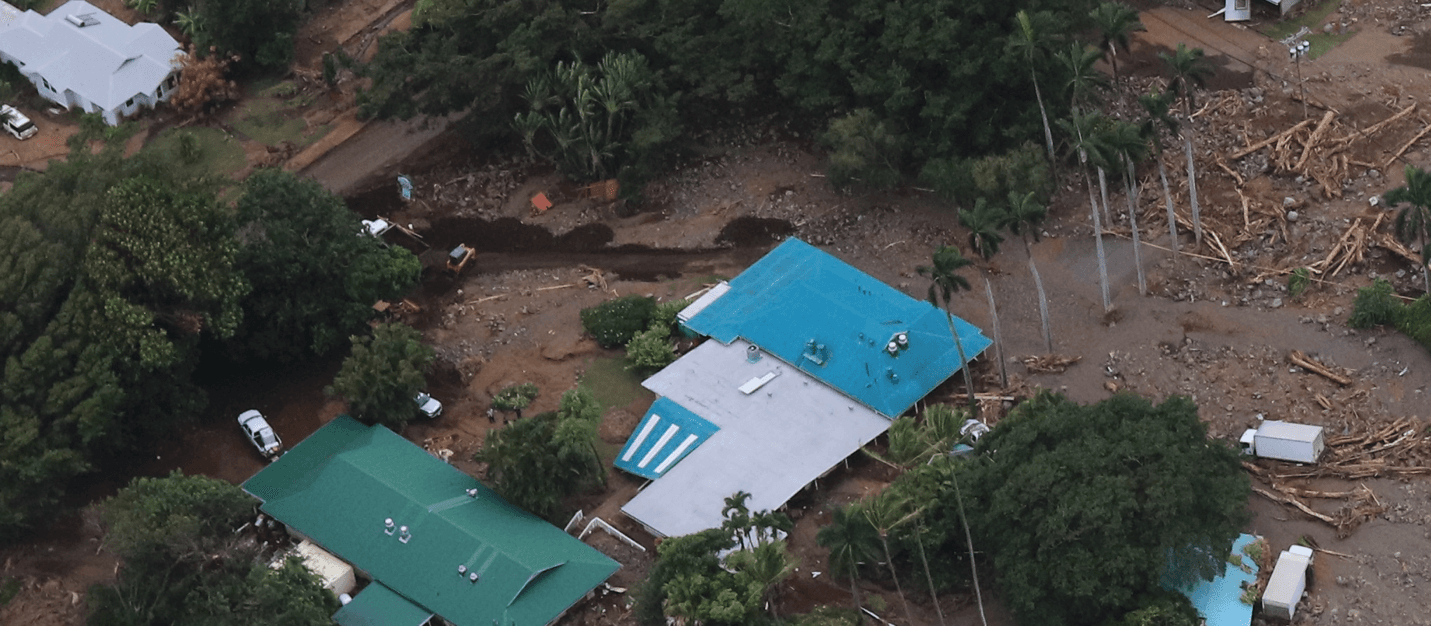
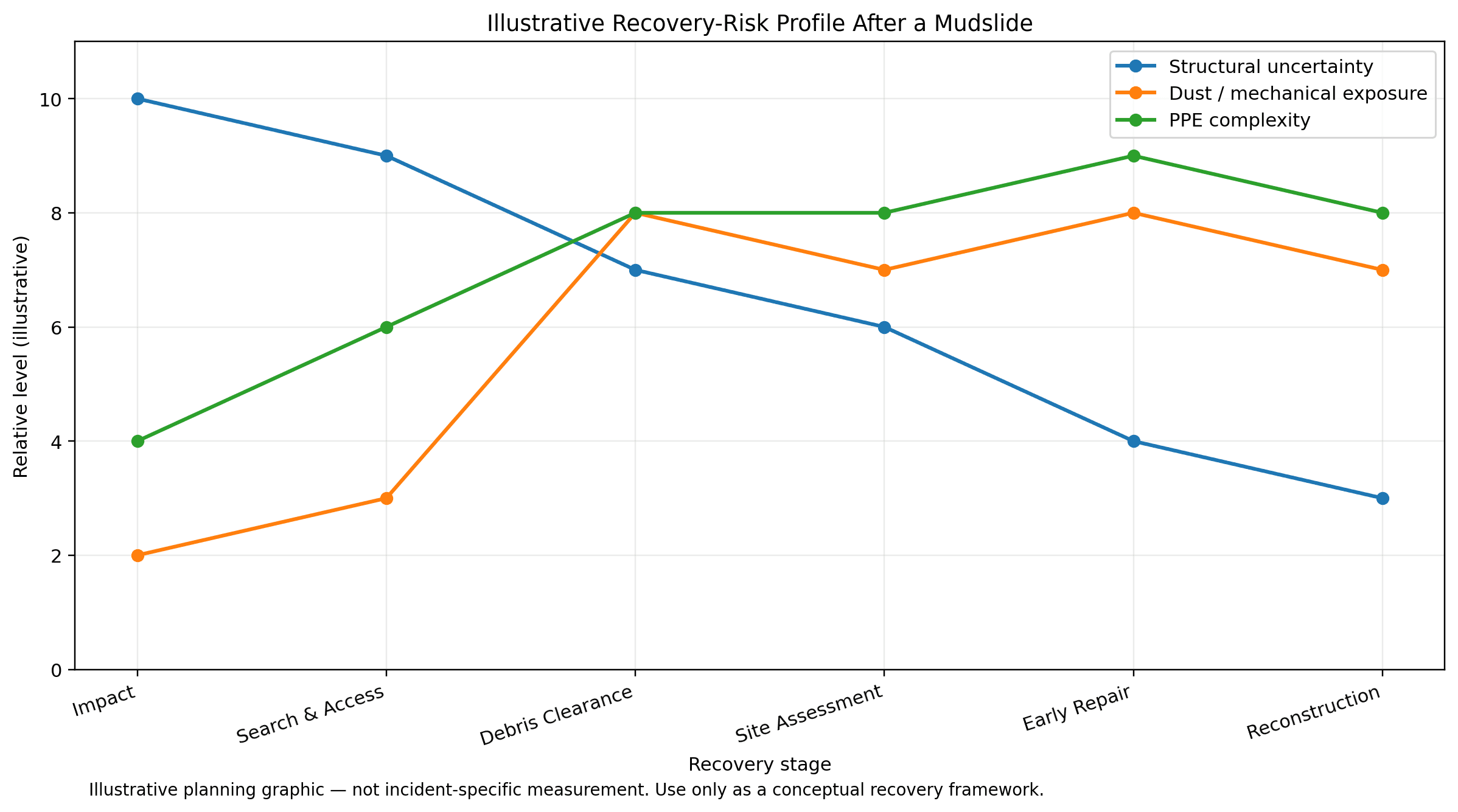
A mudslide recovery site is not one task. During initial access, the dominant concern may be secondary ground movement, falling material or the interaction between people and emergency vehicles. During debris clearance, sharp objects, unstable loads, noise, dust and heavy equipment become more prominent. When dried mud and concrete are cut or swept, airborne dust can become a different exposure problem. Damaged roofs, floors, slopes and temporary access routes create additional fall and structural hazards during inspection and repair.
Because the risk profile changes, PPE selection must be tied to a defined task and hazard assessment. A hard hat, respirator or glove cannot make an unstable area safe, and no single kit is appropriate for every phase.
01 Initial access and search support
Only trained and authorized personnel should enter controlled areas. Before entry, incident command or the responsible site authority should define exclusion zones, communication, weather triggers, escape routes and the conditions that require withdrawal. PPE comes after those controls, not before them.
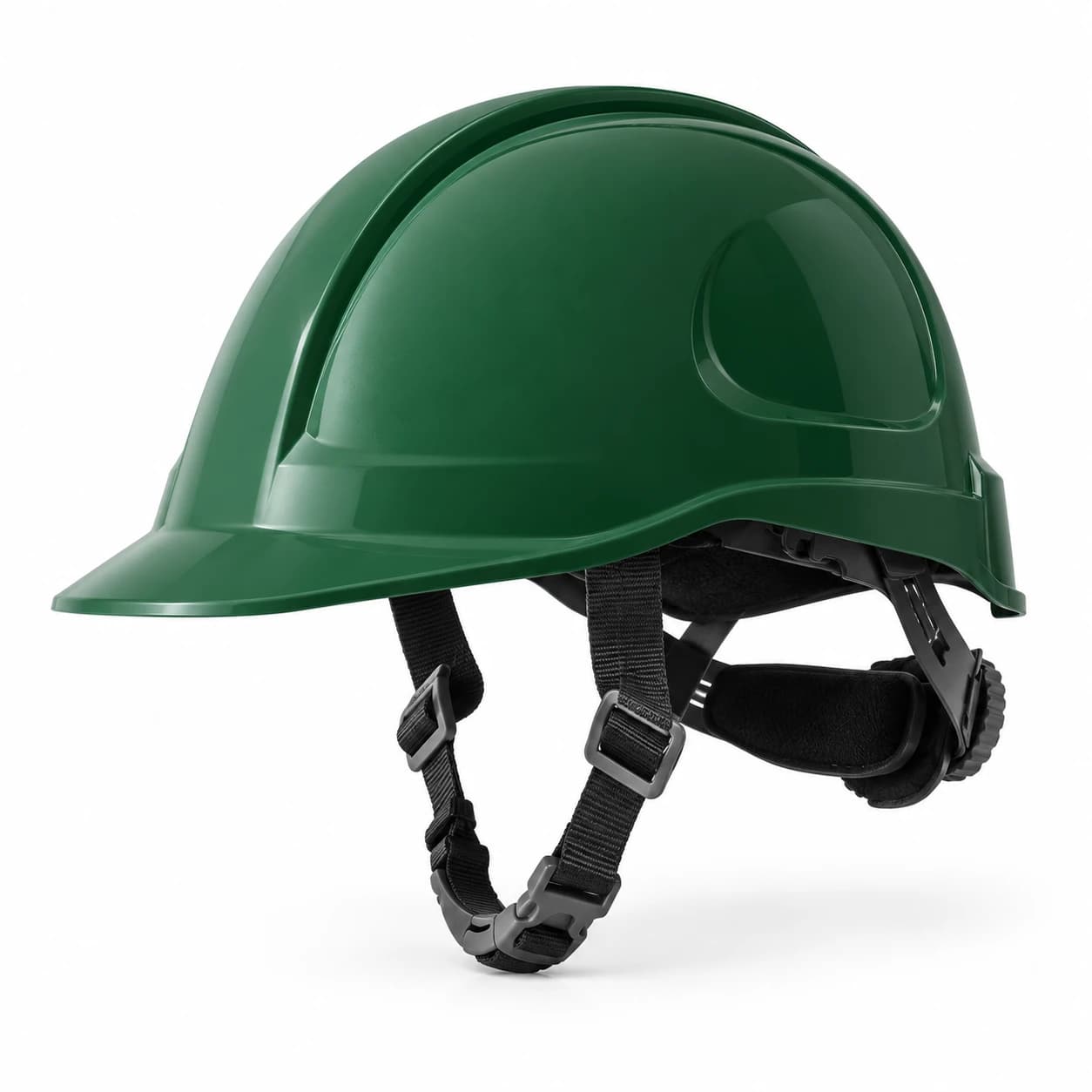
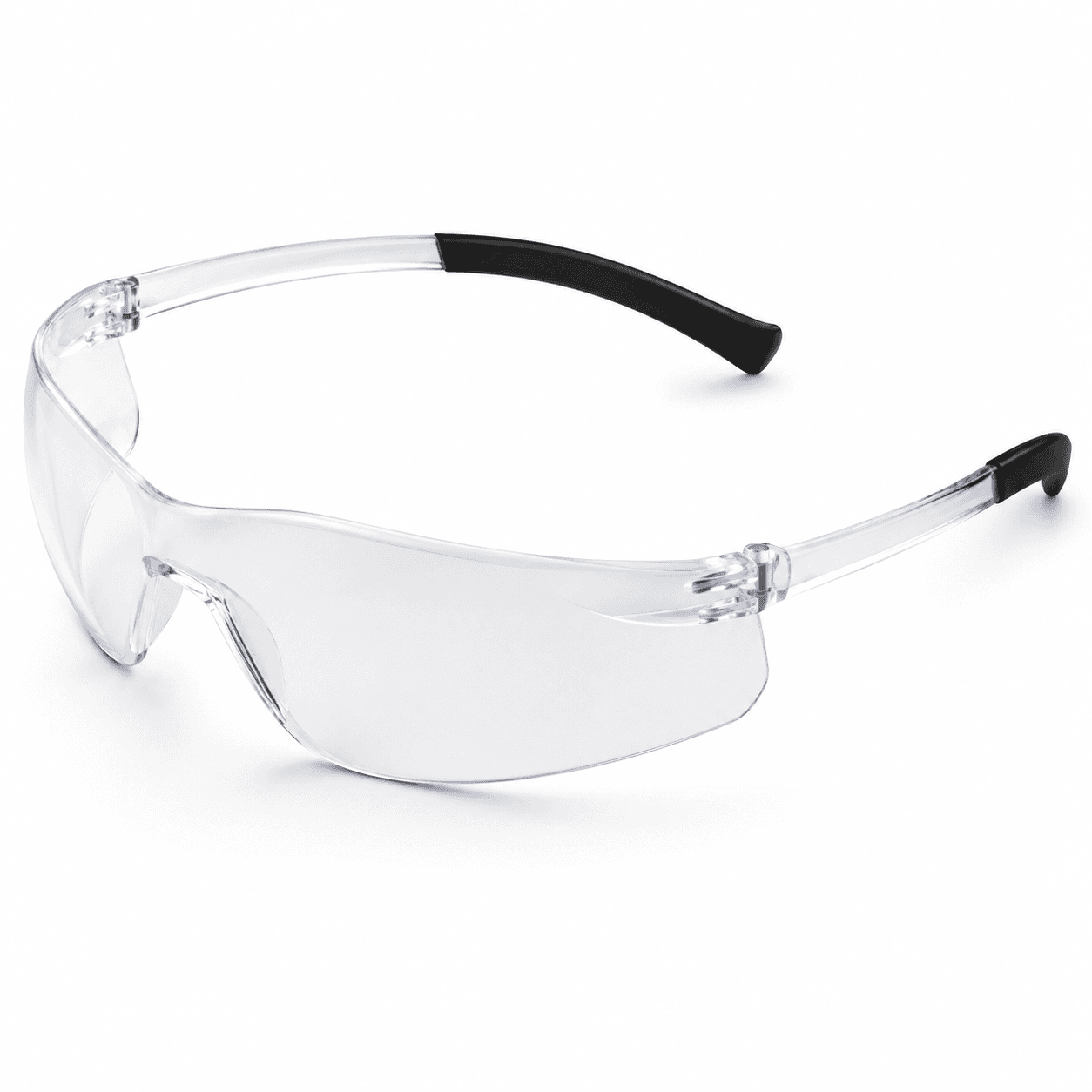
Where the assessment identifies falling or moving material, head and eye protection may be required. Wet, uneven ground can increase the need for task-selected footwear with suitable grip and support. Gloves must match the actual contact hazard, which may include sharp debris, wet materials, contaminated surfaces or manual handling. High-visibility garments may be important where vehicles and plant are operating.
- Confirm who controls entry and how changing ground conditions are communicated.
- Separate pedestrian routes from vehicles and mechanical equipment wherever practicable.
- Select head, eye, hand, foot and visibility protection against the identified task—not the event label.
- Check fit, compatibility and the ability to communicate while equipment is worn.
02 Debris clearance
Debris can conceal nails, metal edges, broken glass, damaged services, voids and unstable objects. Large boulders and woody material can shift as loads are cut or lifted. Mechanical equipment adds struck-by, caught-between and noise hazards. Work planning should establish lifting and exclusion arrangements before crews approach a load.
OSHA’s Hurricane eMatrix identifies work-zone, vehicle, machinery, falling-debris, noise, dust and crystalline-silica concerns in debris collection and removal. Its guidance also makes the central point clear: employers must evaluate the specific hazards of the job and site. PPE is selected within that assessment, alongside engineering, work-practice and administrative controls.
03 Dust becomes a different problem
Fresh mud suppresses some dust; drying, sweeping, vehicle traffic, cutting and demolition can release it again. Rubble may include concrete, masonry or other silica-containing materials. The respiratory question is therefore not simply whether the site looks dusty, but what material is disturbed, how much becomes airborne, how long the task lasts and what controls are feasible.
Use wet methods, local suppression, isolation and suitable tools where these measures are practicable. When respiratory protection is required, the responsible safety program must select it for the assessed exposure and applicable rules. Fit testing, medical evaluation, training, facial-hair limitations, filter change arrangements and compatibility with eye or head protection may all matter. A disposable mask should never be described as protection against every form of disaster dust.
04 Structural assessment and early repair
Floodwater and moving debris can undermine foundations, damage stairs, create floor openings and leave walls, roofs or utilities in uncertain condition. Structural evaluation belongs to qualified personnel. PPE may reduce defined residual risks, but it cannot stabilize a building or replace shoring, isolation, de-energization and controlled access.
Early repair also introduces familiar construction tasks—cutting, drilling, temporary access, material handling and work at height—inside an unfamiliar and changing environment. Each task needs its own method and equipment selection rather than an assumption that the response-phase PPE remains adequate.
| Recovery task | Typical hazards to assess | PPE categories that may be required |
|---|---|---|
| Initial access | Unstable terrain, falling material, vehicles | Head, eye, hand, foot and high-visibility protection |
| Search support | Debris, sharp edges, wet surfaces | Head, eye, gloves and protective footwear |
| Debris removal | Cuts, impact, dust, noise, heavy equipment | Head, eye/face, hand, foot, hearing and respiratory protection |
| Dried mud & rubble cleanup | Dust and silica-containing materials | Eye protection, task-selected respiratory protection and clothing |
| Structural inspection | Falling objects, openings, damaged access | Head protection, footwear and fall protection where required |
| Cutting & demolition | Flying particles, noise and dust | Eye/face, hearing, hand and respiratory protection |
| Early reconstruction | Mixed construction hazards | PPE selected for each individual task |
This matrix is a planning framework, not a substitute for a site-specific hazard assessment.
One site can require several PPE systems
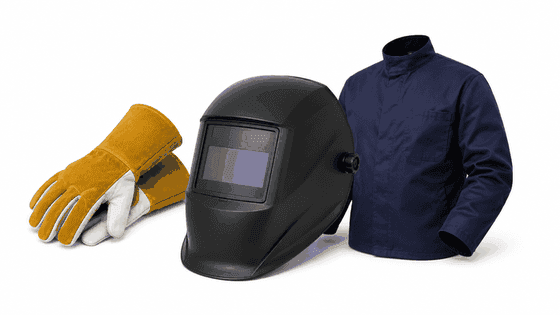
Head, eye and face, hand, foot, hearing, respiratory, protective-clothing and fall-protection categories may all appear in one recovery plan. That does not mean every person wears every item. It means the procurement schedule must connect each task, user group and control plan with the equipment that the competent safety team has selected.
Compatibility is part of that system. A visor must work with the selected head protection. Hearing protection should not compromise helmet fit. Eye protection and a respirator must seal and sit correctly together. Gloves need enough dexterity for the task. Footwear needs to suit both the underfoot conditions and the hazards identified.
PPE is only one layer of protection
The hierarchy of controls remains relevant in recovery work. Avoid entry where the risk cannot be controlled. Stabilize or isolate hazards where possible. Use equipment, barriers, ventilation, wet methods and traffic control to reduce exposure. Define work practices, competent supervision and training. PPE then addresses the residual hazards that remain.
NIOSH guidance for emergency response emphasizes qualified, trained and properly equipped personnel throughout all stages of an emergency. That framing prevents an equipment order from being mistaken for a complete safety plan.
Procurement teams should think in systems, not individual products
A buyer may need to coordinate several categories quickly, but speed should not erase the approval trail. Build the request around task groups, expected users, destination-market requirements, sizes, quantities, compatibility points and the documentation needed before release.
- Separate immediate response needs from planned cleanup and reconstruction demand.
- Record mandatory requirements and items that remain subject to site assessment.
- Group products by task while keeping model and variant identification explicit.
- Plan replacement filters, consumables, spare components and sizing distribution where relevant.
- Confirm instructions, markings, packaging and delivery priorities before order approval.
Model-specific documentation matters
A catalogue category or standards reference is not evidence for every model. Procurement teams should match the quotation, model designation, configuration, product markings, instructions, declaration and any certificate or report that is required. The organization shown as the certificate or document holder must remain accurate.
Ecofort can coordinate files with qualified manufacturing partners, but the review remains product-specific. No blanket statement should imply that every item is certified for rescue, every respirator covers all dust, or one configuration is appropriate for all markets and tasks.
Early recovery is still hazardous work
As roads reopen and cleanup becomes routine, teams can become less alert to changing slopes, unstable structures and mixed vehicle-pedestrian movement. The work may look more organized while residual hazards remain. Continue briefings, access controls, monitoring and equipment checks until the responsible authority formally changes the work plan.
Near misses, damaged PPE, unexpected dust, water changes or shifting debris should feed back into the assessment. Recovery plans work best when they can be revised rather than treated as a fixed kit list.
A practical starting point for PPE planning
Before requesting products, ask five buyer questions:
- What exact tasks will each user group perform, and who has approved the hazard assessment?
- Which engineering, isolation, traffic and work-practice controls will be in place?
- Which PPE categories and compatibility points follow from the remaining hazards?
- What model-specific standards, markings, instructions and documents must be reviewed?
- How will sizing, training, issue, inspection, replacement and replenishment be managed?
These questions create a clearer bridge between field planning and procurement. They also make it easier to compare proposals without turning broad product claims into assumed protection.
Sources
- 01World Meteorological Organization — State of the Climate in Asia 2025
- 02NIOSH / CDC — Protecting Emergency Response and Recovery Workers
- 03OSHA — Debris Collection, Hurricane eMatrix
- 04OSHA — Assessment, Cleanup, and Repair of Structures, Hurricane eMatrix
- 05USGS — 2026 Nepal Debris Avalanche and Flash Flood Map
- 06USGS — 2026 Hurricane Lala landslide source areas
- 07USGS — Homes and vehicles buried by mud, boulders and woody debris after Hurricane Lala