
From Wildfire Smoke to Ash Cleanup: Protecting Recovery Crews After the Flames
A practical guide to post-wildfire cleanup and recovery safety, covering smoke, ash, unstable structures, debris, heat, hazardous materials and task-based PPE selection.
In this article +
A wildfire can be over as an active emergency while the worksite it leaves behind is only beginning to reveal its hazards. For cleanup crews, inspectors, contractors and infrastructure teams, the risk shifts from flame front and active suppression to smoke, ash, damaged structures, unstable trees, sharp debris, heat, electrical hazards and contaminated materials.
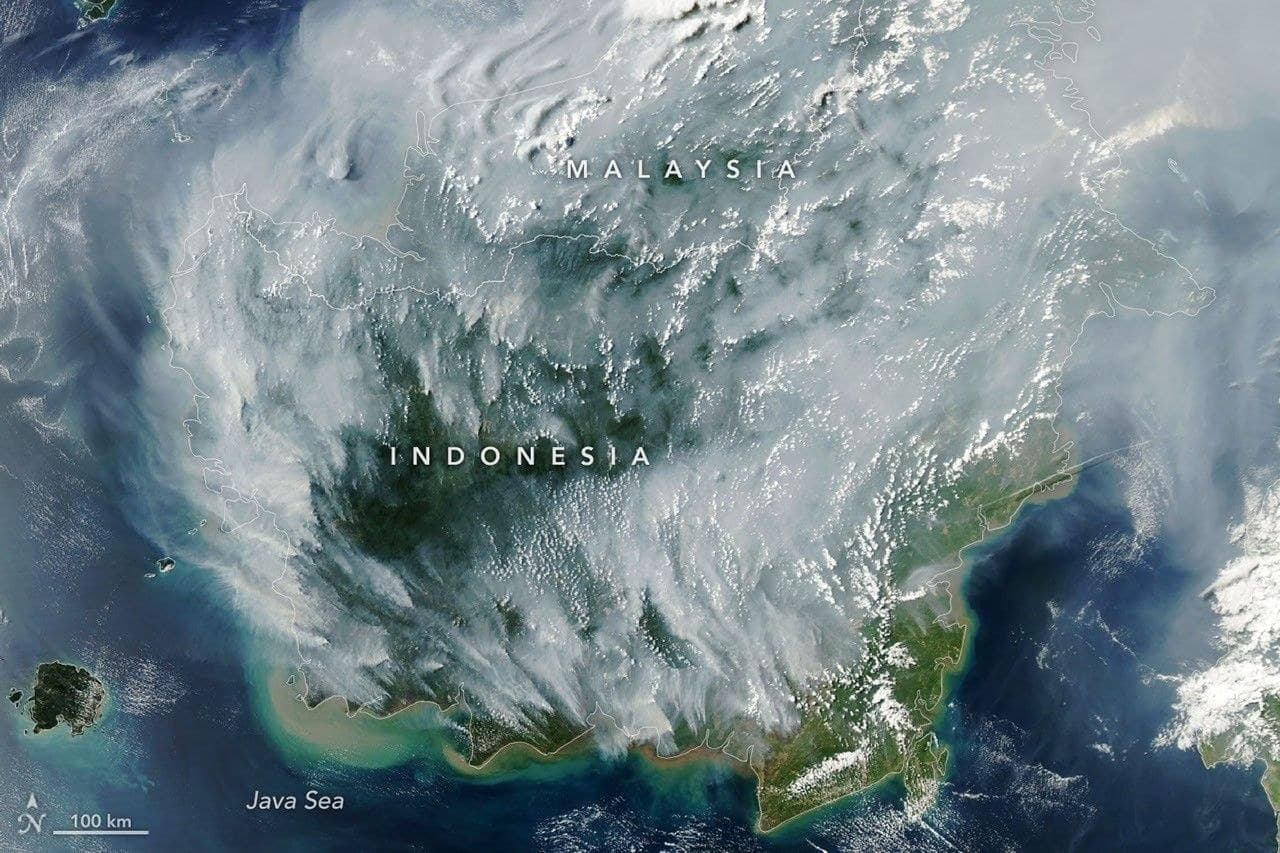
In early September 2026, NASA’s Aqua satellite captured thick smoke spreading across Borneo as Indonesia entered an increasingly active peat-fire season. NASA reported that the country’s fire activity was rising rapidly under severe drought conditions, with widespread smoke already disrupting daily life in parts of the region.
What happens after the flames are gone?
NIOSH separates post-wildfire cleanup from active firefighting for an important reason. Recovery workers face a different hazard profile. The site may no longer have an advancing flame front, but it can still contain unstable buildings, hazard trees, energized lines, hazardous chemicals, airborne ash, hot material, carbon-monoxide sources, heavy debris and demanding manual work.
What task is being performed, what hazard remains, what controls are possible, and what PPE is needed for the residual exposure?
A current fire season, viewed from space
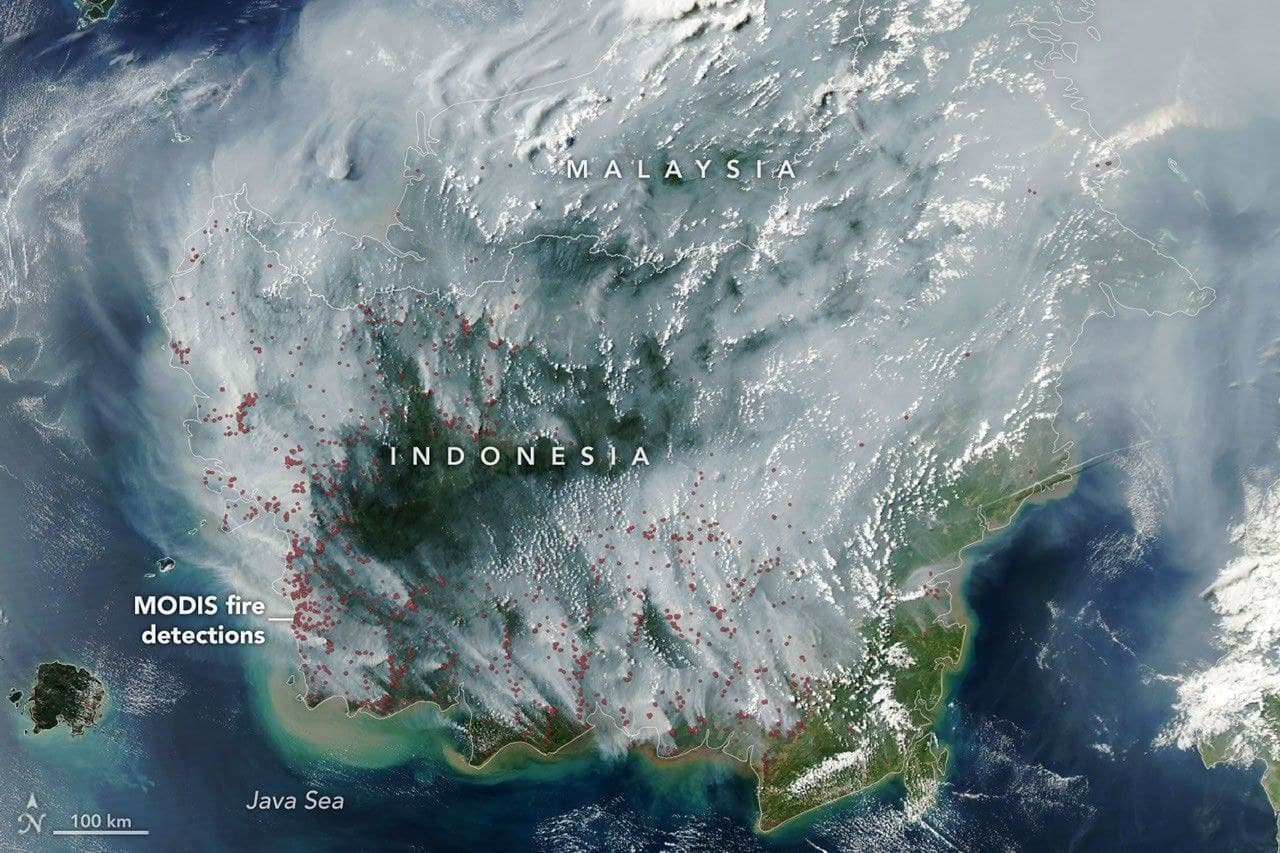
The 2026 Indonesia imagery shows the scale of smoke and fire activity from a perspective that ground photography cannot. MODIS fire detections identify thermal anomalies across Borneo, while the accompanying natural-color image shows broad smoke plumes spreading over the island.
Remote sensing is not a PPE tool, but it illustrates an important principle for recovery planning: wildfire is rarely a single-point hazard. Smoke, access constraints, damaged infrastructure and post-fire terrain can affect areas far beyond the visibly burned perimeter.
The European record also shows why wildfire recovery deserves systematic attention. Copernicus reported that Europe reached a new record burnt area in 2025—approximately 1,034,552 hectares—surpassing the previous record of about 988,524 hectares set in 2017.
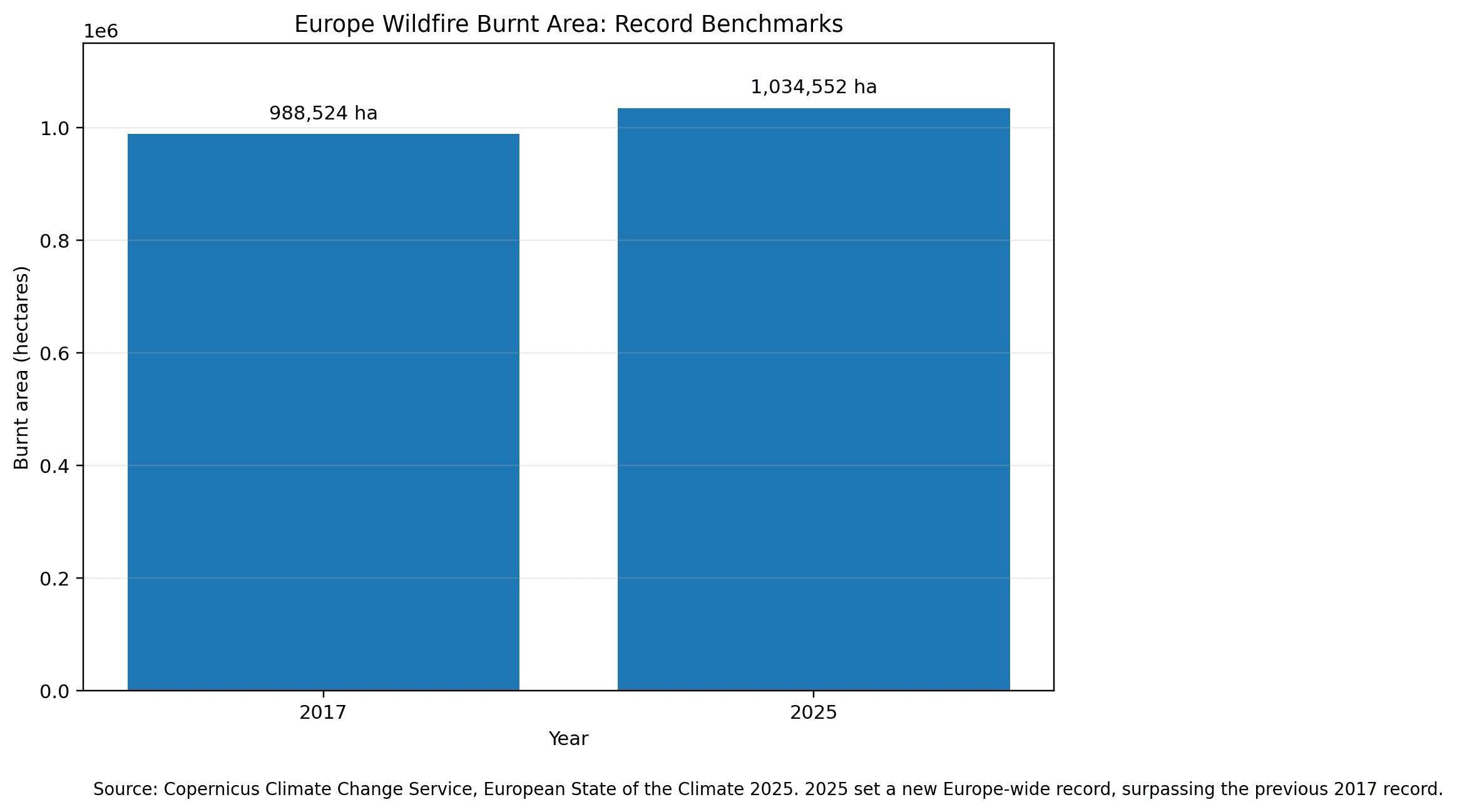
This comparison should not be read as a claim that every region experiences a simple year-by-year upward trend. Wildfire activity is highly variable. It does show that very large fire seasons continue to create substantial cleanup, infrastructure and rehabilitation workloads.
The fire is out. The hazard is not.
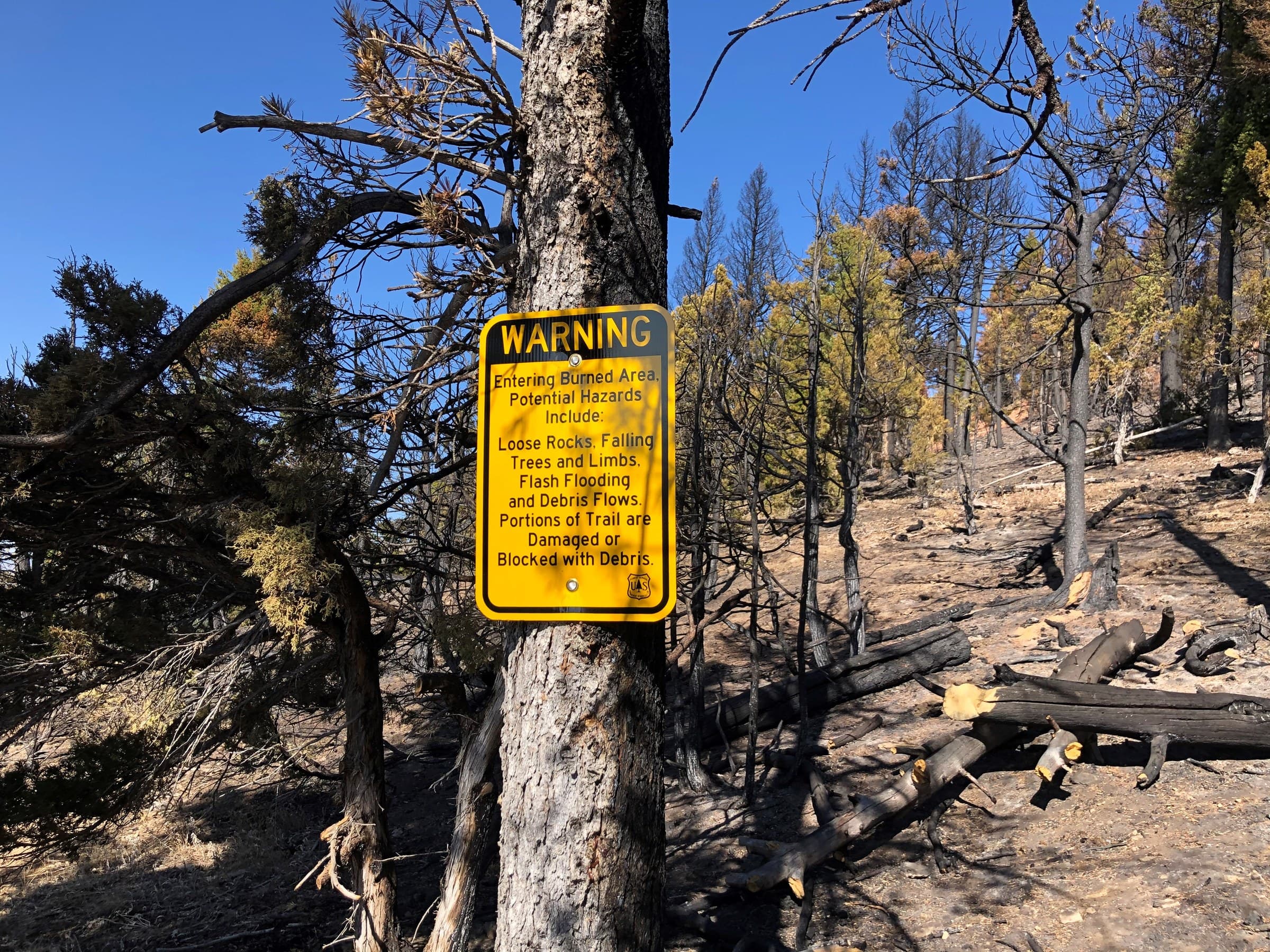
The operational transition from suppression to recovery can create a false sense of safety. Once visible flames are gone, the site may look quieter. Yet NIOSH warns that cleanup work after wildland fires can involve severe hazards, and in many situations professional restoration or cleanup crews are more appropriate than untrained volunteers.
Post-fire work can include site re-entry and assessment, debris removal, ash cleanup, damaged structure inspection, hazard-tree identification, utility restoration, road and drainage work, demolition, environmental stabilization and reconstruction. Each task has its own exposure profile.
01 — Burned and unstable structures
A structure that survives a wildfire is not automatically safe to enter. Fire can weaken roofs, stairs, floors, wall systems, fasteners, structural members, glazing, foundations and utility connections. Damage may be visible, but it may also be concealed.
NIOSH advises that workers should not assume damaged buildings are stable and should avoid working around fire-damaged structures until qualified professionals have evaluated them where necessary. Potential injury mechanisms include slips and falls, punctures, falling materials, sudden structural movement and partial collapse.
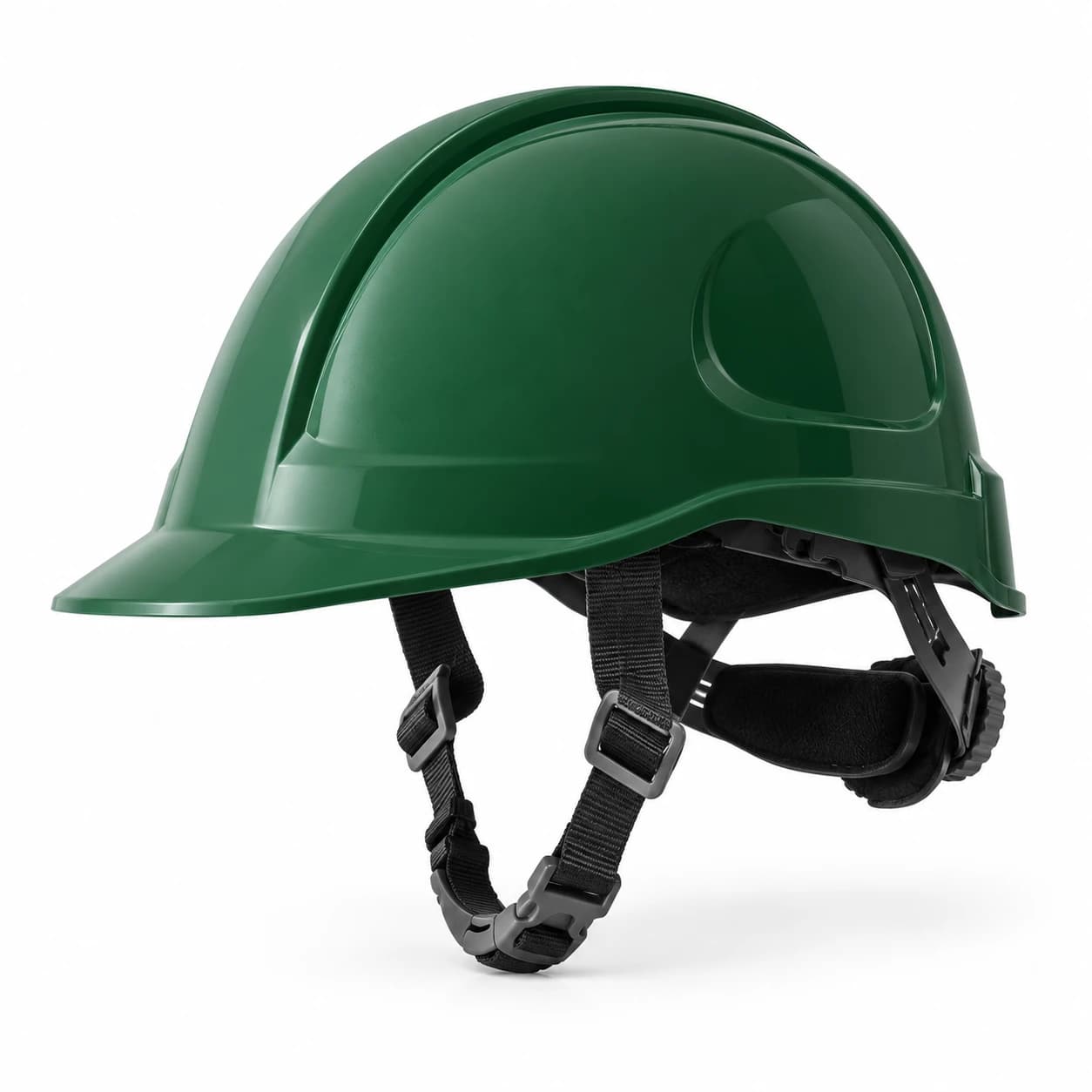
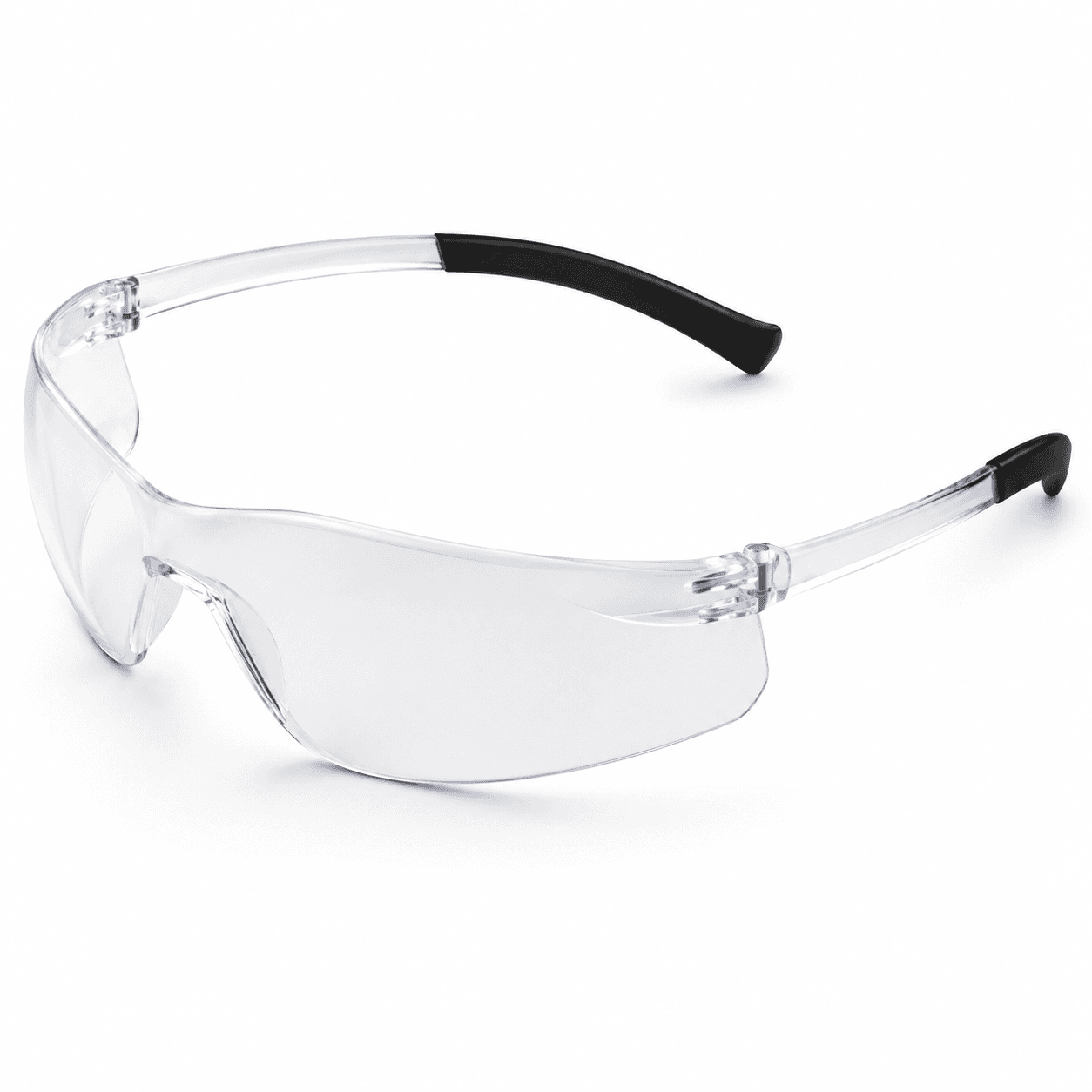
Depending on the task and site assessment, PPE may include head protection, safety eyewear, gloves, protective footwear and protective clothing. But PPE does not make an unsafe building structurally sound. The first control is still to identify, isolate and eliminate the hazard where possible.
02 — Hazard trees and overhead exposure
Wildfire can leave standing trees that look intact while their root systems or trunks have been severely damaged. These trees—often described as hazard trees or snags—can fall with limited warning. That creates a risk to cleanup personnel, vehicle operators, survey teams, utility crews, road-clearance teams and contractors working near the burn area.
Tree evaluation and removal is specialized work. Workers should not treat a hard hat as permission to operate beneath an unstable tree. The control strategy may include professional tree assessment, exclusion zones, controlled access, mechanical removal, work sequencing and head protection where falling-object exposure remains.
03 — Ash is not simply dirt
Ash can be light enough to become airborne during dry sweeping, vehicle movement, debris handling, demolition, wind, use of blowers and disturbance of burned materials. NIOSH advises against dry methods that unnecessarily put ash into the air and notes that household-style vacuums may not adequately control small particles unless appropriate HEPA filtration is used.
Burned structures may contain materials associated with asbestos, lead, pesticides, fuels, paints, solvents, treated timber and household chemicals. The hazard is not determined by the color of the ash or how dusty the area looks. A competent assessment is needed before choosing respiratory protection, gloves, clothing or cleanup methods.
04 — Wildfire smoke is a mixture, not a single contaminant
NIOSH describes wildland-fire smoke as a complex mixture of gases and particles that can include carbon monoxide, particulate matter, hydrocarbons and other compounds. Respiratory protection cannot be selected responsibly from the word smoke alone.
Selection depends on the contaminant, particle versus gas or vapor exposure, concentration, oxygen conditions, work duration, task, fit requirements and the applicable respiratory-protection program. Respirators are one part of a broader control strategy.
- Delay work or move it upwind where feasible.
- Reduce time in exposure and isolate dusty processes.
- Use ventilation, wet methods and HEPA-filtered cleanup where appropriate.
- Use air monitoring and a compliant respiratory-protection program where required.
05 — Electrical and utility hazards
Fire can damage poles, overhead lines, service entrances and equipment. NIOSH warns that downed or damaged power infrastructure can remain dangerous after a fire. Recovery teams should assume that electrical hazards require control by qualified personnel.
PPE may be part of a specialist electrical-safety system, but ordinary work gloves or a general industrial helmet should never be represented as protection against an electrical hazard unless the exact equipment, rating and application are verified. Visual similarity is not evidence of electrical performance.
06 — Hazardous materials can become less visible after fire
A damaged building may contain materials that were safe while enclosed, labeled and stored correctly—but dangerous once burned, cracked or dispersed. Examples include propane cylinders, fuel, pesticides, asbestos-containing material, lead-containing coatings, cleaning chemicals and solvents.
Cleanup personnel should not improvise hazardous-material response. The correct response may involve specialist identification, isolation, hazardous-material procedures and task-specific PPE. For procurement teams, chemical-resistant gloves is not a complete specification: glove material must be compatible with the actual chemical exposure.
07 — Carbon monoxide can remain a cleanup hazard
Generators, pumps, pressure washers and other fuel-powered equipment are common in disaster recovery. They can also create carbon-monoxide exposure. NIOSH emphasizes that gasoline- and diesel-powered equipment should not be operated in enclosed spaces and that exposure can occur even outdoors near concentrated exhaust.
This is a control issue before it is a PPE issue. No helmet, safety glasses or protective glove can compensate for an uncontrolled carbon-monoxide environment.
08 — Heat stress does not disappear when the fire is out
Wildfire recovery often takes place outdoors, during hot weather, while workers perform physically demanding tasks in protective equipment. Heat strain can be affected by air temperature, radiant heat, workload, clothing, PPE, hydration, acclimatization, rest schedules and direct sunlight.
A recovery PPE plan should consider not only protection from the task, but also whether the selected equipment increases thermal burden. The most protective-looking configuration is not always the safest if it is inappropriate for the hazard or prevents the worker from performing safely in heat.
09 — Debris removal creates mechanical risk
Post-fire debris can include sharp metal, glass, nails, damaged timber, unstable masonry, wire, roofing material, appliances, vehicle debris and burned vegetation. Cleanup may involve lifting, carrying, cutting, chainsaw work, sorting, loading and heavy equipment.
This introduces risks such as cuts, puncture, crush, struck-by exposure, eye injury, noise, vibration and musculoskeletal strain. PPE needs may therefore expand from respiratory or ash protection into hand, eye, hearing, head and foot protection.
| Recovery task | Hazards to assess | PPE focus that may be required |
|---|---|---|
| Initial re-entry | Unstable structures, hazard trees, hot spots, damaged utilities | Head, eye, hand, foot and protective clothing |
| Ash cleanup | Fine particles, irritants, hazardous residues | Task-selected respiratory, eye, gloves and clothing |
| Debris removal | Sharp metal, glass, puncture, impact, heavy materials | Hand, foot, head and eye/face |
| Cutting and clearing | Flying particles, noise, vibration, sharp material | Eye/face, hearing, gloves and head protection |
| Burned structure inspection | Falling objects, collapse, floor openings | Head, footwear and fall protection where required |
| Outdoor recovery | Heat, smoke, fatigue, sun | Task PPE plus heat-stress controls |
| Rehabilitation | Construction and environmental hazards | Hazard-specific PPE by task |
This matrix is a planning framework, not a substitute for a site-specific hazard assessment.
How the risk profile changes after a wildfire
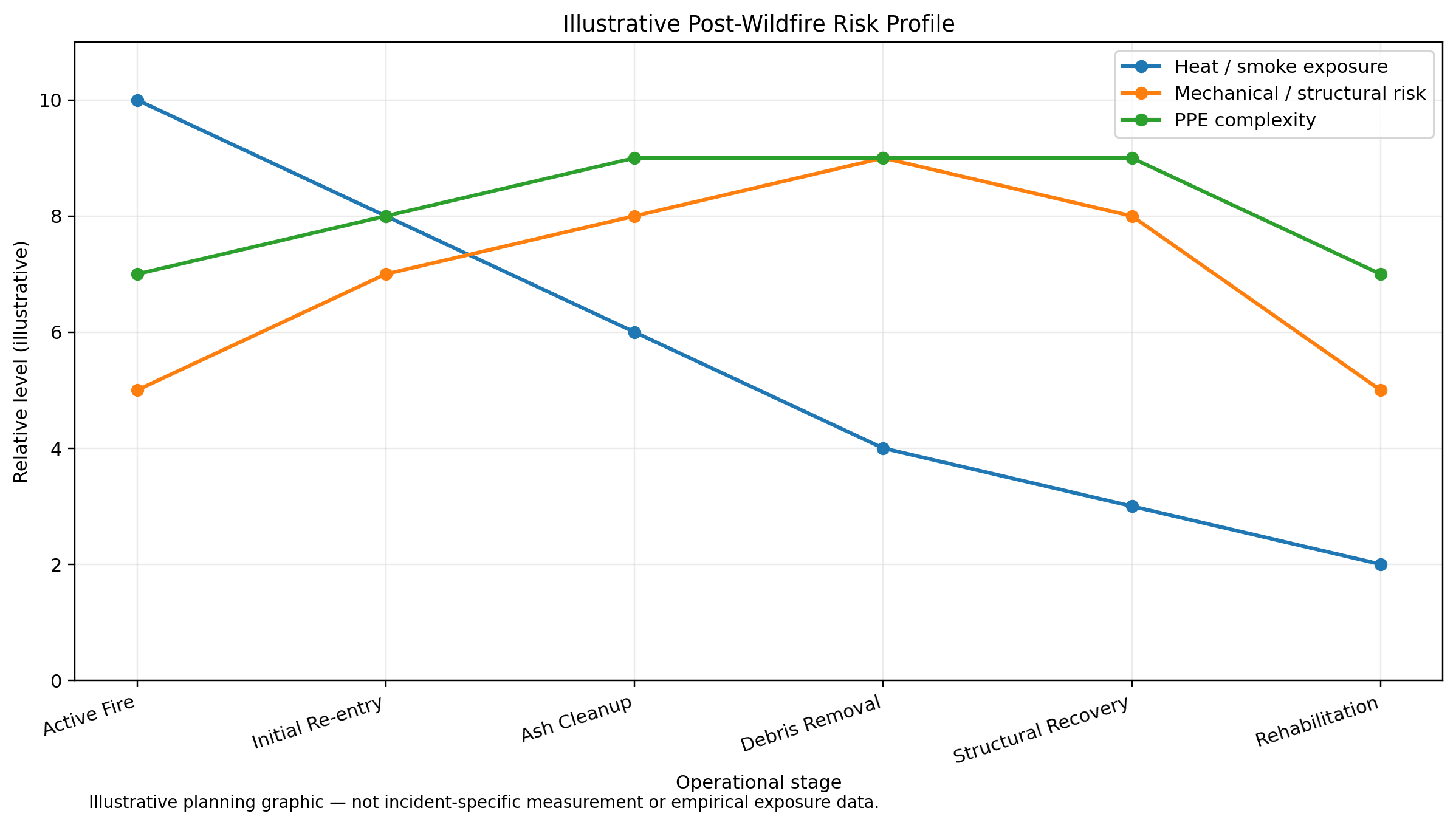
The risk does not simply move from high to low once a fire is contained. Instead, the dominant hazards change. Heat and smoke may decline, while mechanical and structural hazards may become more important as people enter damaged areas.
PPE complexity may increase when recovery moves into specialist work such as demolition, utilities, cutting, confined spaces or construction. The chart is intentionally labeled illustrative because the exact risk profile will differ by incident and task.
PPE is only one layer
A professional recovery plan should still follow the hierarchy of controls: eliminate unnecessary entry, engineer dust and structural controls, administer restricted access and safer work sequencing, and then protect against the residual risk with task-selected PPE.
This is why buying a generic wildfire PPE kit is usually the wrong starting point. A product order cannot replace site control, competent supervision, exposure assessment or specialist response.
Procurement teams should think by task, not by disaster label
Wildfire recovery can involve several different workforces. A public-works crew may need head, eye, hand, high-visibility, foot and hearing protection. An ash-cleanup team may need a different respiratory and clothing strategy. A structure-inspection team may need fall protection, while a utility contractor may need specialist electrical PPE.
Which workers will perform which tasks, under which hazards, and which model-specific standards or documentation apply?
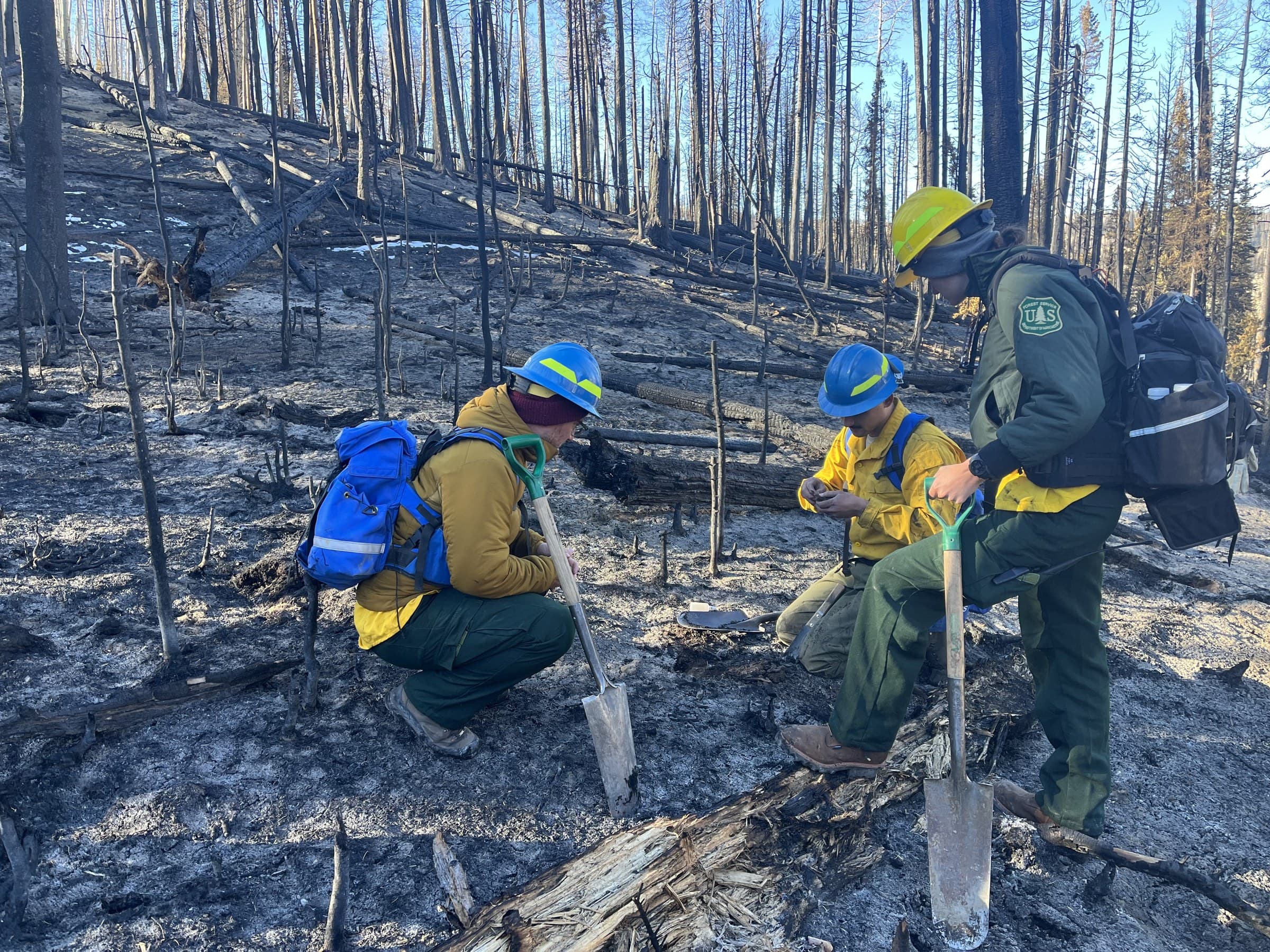
Recovery is multidisciplinary
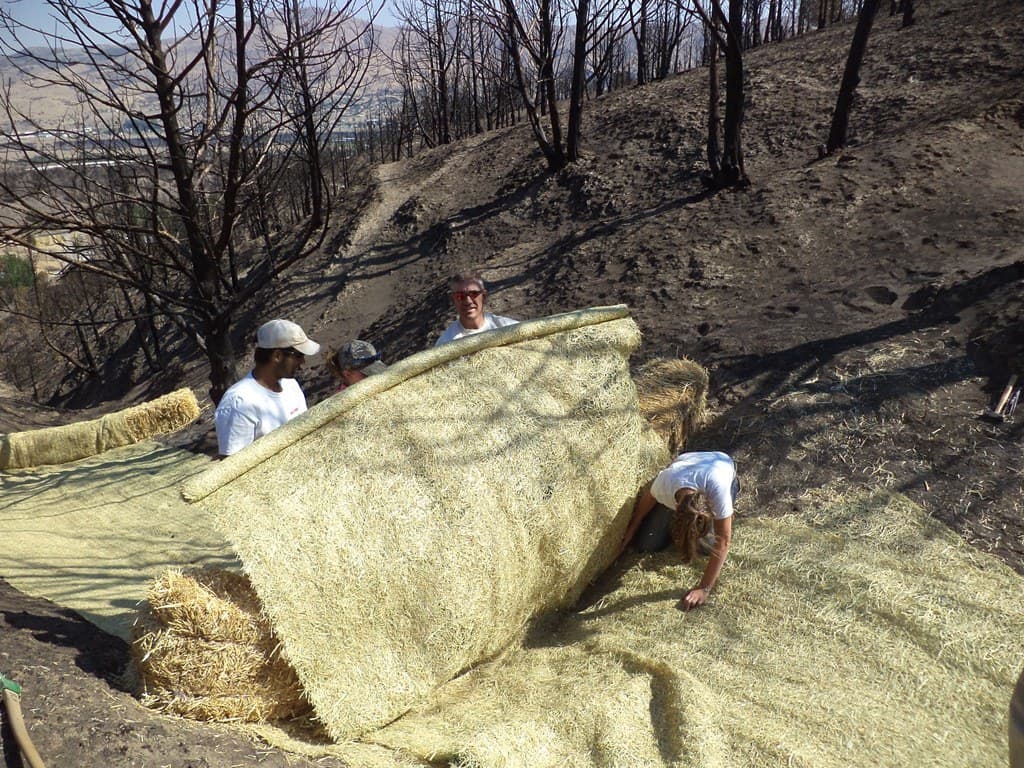
Burned Area Emergency Response teams illustrate the wider point. Post-fire recovery can involve hydrologists, soil scientists, engineers, geologists, land managers, utility specialists, construction teams and environmental personnel. They do not all need the same PPE, and even within one job title the PPE can change when the task changes.
A multi-category procurement plan should therefore begin with the work breakdown, not with a generic list of products.
Model-specific documentation matters
In a PPE catalogue, two products can look similar while carrying different performance claims, standards, test results or intended uses. Buyers should verify documentation for the actual selected model across head, eye, hand, foot, hearing, respiratory, clothing and fall-protection categories.
For high-risk or regulated applications, documentation should be treated as part of product selection—not as an afterthought. Ecofort’s role is product-specific documentation coordination through qualified manufacturing partners, not a blanket claim that every product carries every standard.
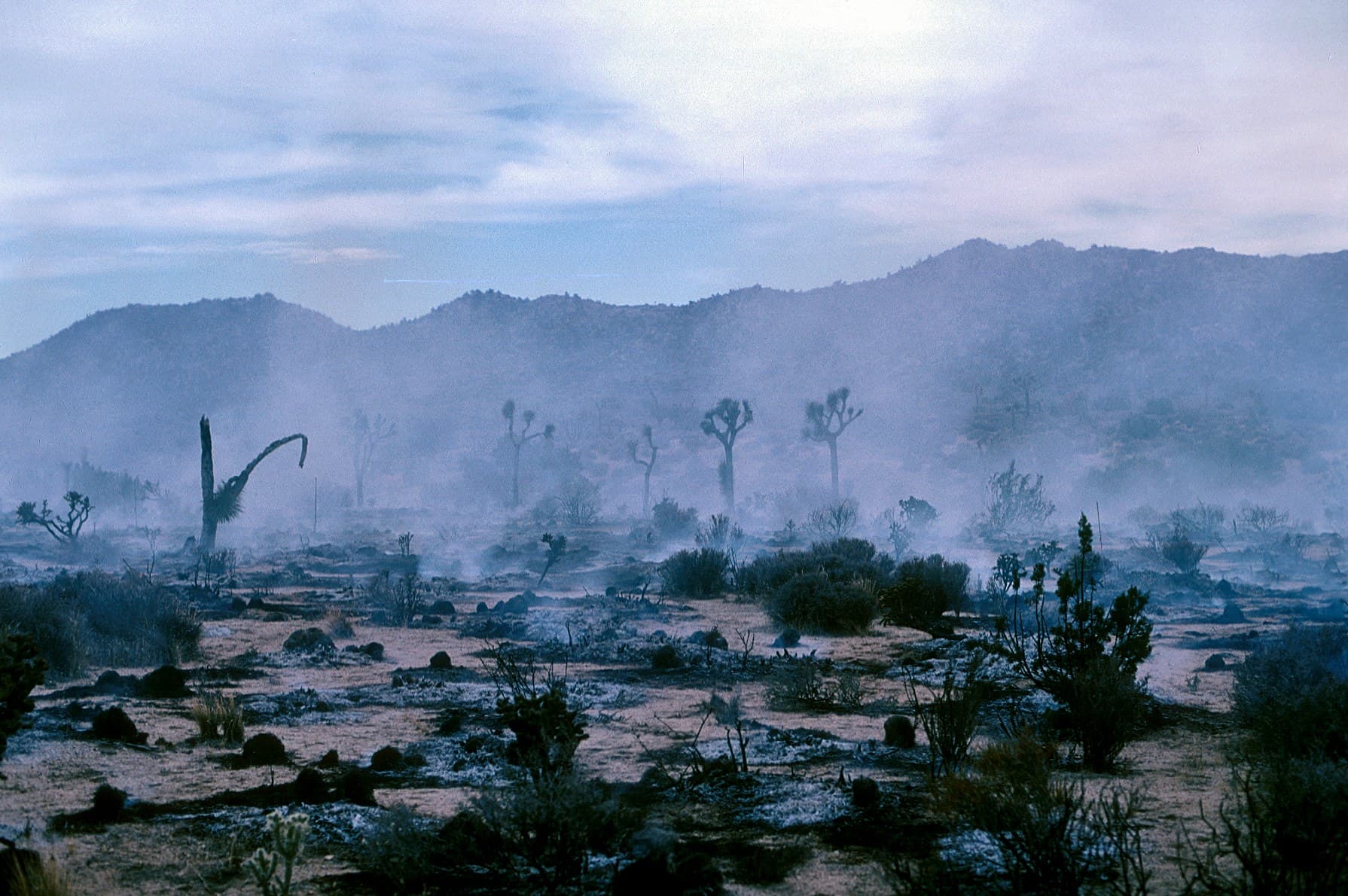
The recovery phase can outlast the news cycle
A major wildfire can dominate headlines for days, while recovery can continue for months or years. Crews may still be stabilizing slopes, restoring drainage, assessing roads, replacing utilities, rebuilding structures, controlling erosion and monitoring environmental damage.
The occupational risk changes as the site moves from emergency response toward reconstruction. That makes post-fire safety less dramatic than active firefighting—but no less deserving of structured hazard assessment.
Five questions before preparing a wildfire-recovery PPE request
- What work will the crew actually perform?
- What hazards are expected at each stage—smoke, ash, structures, electrical systems, debris, heat, chemicals or falls?
- Which hazards can be eliminated or controlled before PPE is selected?
- Which standards, ratings or certifications apply to the task and jurisdiction?
- What model-specific documentation must be verified before deployment?
These questions make multi-category sourcing significantly more precise.
Sources
- 01NASA Earth Observatory — Peatland Fires Darken Skies in Indonesia
- 02NIOSH / CDC — Hazards During Wildland Fire Cleanup
- 03NIOSH / CDC — Wildland Fire Smoke
- 04Copernicus Climate Change Service — European State of the Climate 2025: Wildfires
- 05USDA Forest Service — Burned Area Emergency Response work
- 06USDA Forest Service — BAER field assessment, Cara Sponaugle
- 07National Park Service — Post-wildfire scene
- 08Bureau of Land Management — Emergency Stabilization and Rehabilitation after wildfire